Anki Explained
Hermann Ebbinghaus and the Science of Memory
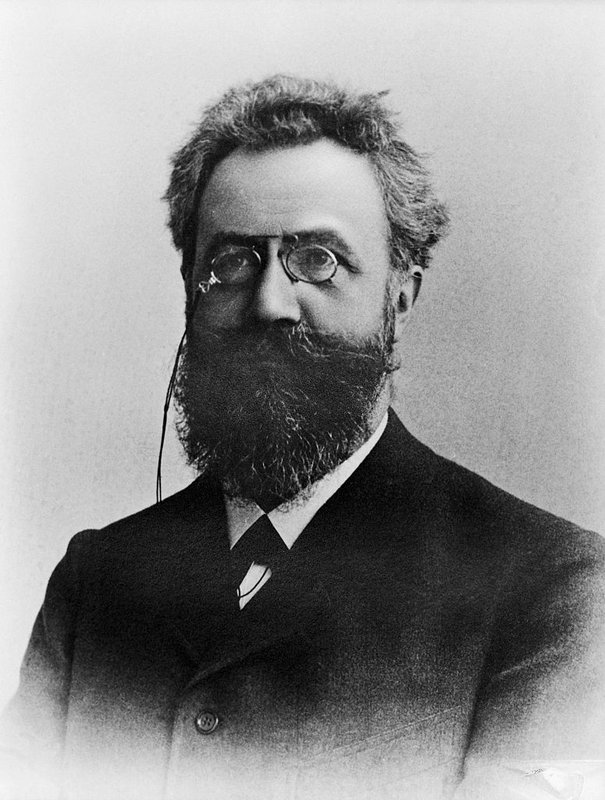
Hermann Ebbinghaus
“the single most brilliant investigation in the history of psychology” —William James
Hermann Ebbinghaus (1850–1909) was a German psychologist who became the first person to apply rigorous experimental methods to the study of human memory. Before Ebbinghaus, memory was the province of philosophers and armchair speculation. His work changed that entirely, transforming our understanding of how we learn—and how we forget—into something measurable and reproducible.
In 1885, Ebbinghaus published his landmark monograph Über das Gedächtnis (“On Memory”), later translated as Memory: A Contribution to Experimental Psychology (Ebbinghaus, Hermann, 1885). This thin volume contained experimental findings so robust that they remain foundational to cognitive psychology over a century later. His most enduring contribution was the forgetting curve: a mathematical description of how quickly memories decay when they are not revisited.
What makes Ebbinghaus’ work remarkable is that he was both the researcher and the sole experimental subject. Over the course of several years, he subjected himself to thousands of memorisation and recall trials, meticulously recording the results. His rigour and self-discipline produced insights that no amount of philosophical musing had managed to uncover.
The Nonsense Syllable Experiments
To study memory in its purest form, Ebbinghaus needed material that carried no prior associations, emotional weight, or semantic meaning. His ingenious solution was the nonsense syllable—a consonant-vowel-consonant (CVC) trigram with no meaning in any language he knew.
DAX   BUP   ZOL   QEF   WIB   MUJ   TAV   FEP
GIR   NUX   KEJ   BOZ   RUP   HIL   WEF   CUV
PIB   LOJ   VEK   SAZ   TUG   HAM   FIQ   DUW
By constructing lists of these syllables, Ebbinghaus stripped away the confounding effects of pre-existing knowledge. A word like “house” might be easier to remember than “glory” because of vivid personal associations—but DAX and ZOL start on equal footing. This allowed him to isolate the pure mechanics of memory formation and decay.
His method was straightforward: memorise a list of syllables until he could recite them perfectly, then test himself at increasing intervals—20 minutes, 1 hour, 9 hours, 1 day, 2 days, 6 days, and 31 days later. He measured what he called savings: the reduction in effort required to re-learn a list compared to learning it from scratch. If a list originally took 10 minutes to memorise and only 4 minutes to re-learn the next day, the “savings” was 60%—indicating that 60% of the memory trace persisted.
The Forgetting Curve
The results were striking. Memory retention follows a predictable exponential decay. Approximately 56% of the material was forgotten within the first hour, 66% within one day, and 75% within six days. The curve is steep at first—most forgetting happens rapidly after learning—then gradually levels off. Whatever survives the first few days tends to persist much longer.
Ebbinghaus described this relationship mathematically. Modern formulations express it as:
\[ R(t) = e^{-t/S} \]
where \(R\) is retention (as a proportion), \(t\) is time elapsed, and \(S\) is the stability of the memory. A higher stability means the memory decays more slowly.
The critical insight—and the one that underpins everything discussed in this article—is that each successful review increases the stability of a memory. The forgetting curve still applies after each review, but it becomes shallower. The memory decays more slowly each time it is retrieved and reinforced.
The following diagram illustrates this principle. The blue curve shows initial learning followed by rapid decay. Each subsequent review (marked by the curve resetting to high retention) produces a progressively flatter decay curve, meaning the memory lasts longer before it needs to be reviewed again:
This is the fundamental mechanism that makes spaced repetition work: by timing reviews strategically, we can maintain high retention while gradually extending the intervals between study sessions.
Active Recall
Active recall is the principle that retrieving information from memory strengthens the memory itself. This stands in sharp contrast to passive review strategies—re-reading notes, highlighting textbooks, or watching lecture recordings—which create an illusion of familiarity without building durable memory traces.
When you attempt to recall a fact, your brain must reconstruct the memory from stored neural patterns. This act of reconstruction is itself a form of practice that reinforces the relevant pathways. The more effortful the retrieval, the stronger the reinforcing effect. This phenomenon is known as the testing effect or retrieval practice, and it is one of the most robust findings in cognitive psychology.
Brown, Peter C. and Roediger III, Henry L. and McDaniel, Mark A. (2014) summarise decades of research on this topic in their book Make It Stick. They describe how students who quiz themselves repeatedly outperform those who spend the same amount of time re-reading—even when the re-readers feel more confident in their knowledge. The subjective ease of re-reading is precisely what makes it a poor learning strategy: it mistakes recognition for recall.
The practical implications are clear. When studying, you should:
- Close the book and try to recite key points from memory
- Use flashcards that require you to produce the answer, not merely recognise it
- Explain concepts to someone else (or to yourself) without notes
- Take practice tests, even before you feel “ready”
The discomfort you feel when struggling to recall something is not a sign of failure—it is the sensation of learning taking place.
Spaced Repetition
Spaced repetition is the practice of distributing study sessions over increasing intervals of time, rather than cramming all study into a single session. It directly addresses Ebbinghaus’ forgetting curve: by reviewing material just as it is about to be forgotten, each review resets the curve at a higher level of stability.
The contrast with massed practice (cramming) is dramatic. A student who studies a topic for three hours in one sitting will likely remember less a week later than a student who studies the same topic for one hour on three separate days. The spaced approach is less intuitive—it feels harder, and performance during each session may be lower—but the long-term retention is vastly superior.
The first widely-known physical implementation was the Leitner system, developed by German science journalist Sebastian Leitner in the 1970s. In this system, flashcards are sorted into boxes. Cards in Box 1 are reviewed every day; cards in Box 2 every few days; cards in Box 3 once a week; and so on. When you answer correctly, a card is promoted to the next box. When you answer incorrectly, it returns to Box 1. This simple mechanism naturally produces increasing intervals for well-known material and frequent repetition for difficult items.
The first software implementation was SuperMemo, created by Polish researcher Piotr Wozniak in 1987. Wozniak developed a scheduling algorithm (SM-2) that calculated optimal review intervals based on a card’s history of correct and incorrect responses. SuperMemo demonstrated that computers could manage the scheduling problem far more precisely than any physical card system. The core algorithm from SuperMemo went on to influence virtually every digital spaced repetition tool that followed.
Interleaving
Interleaving is the practice of mixing different topics, problem types, or skills during a single study session, rather than focusing on one topic at a time (known as “blocked” practice).
Like spaced repetition, interleaving is counterintuitive. Blocked practice feels more productive—you develop fluency within a session and seem to be making rapid progress. But this fluency is often superficial. When different problem types are interleaved, your brain must repeatedly identify which strategy applies to each new problem. This additional step of discrimination—deciding what kind of problem you are facing, not just how to solve it—is exactly the skill required in real-world settings, where problems do not arrive pre-sorted by type.
Brown, Peter C. and Roediger III, Henry L. and McDaniel, Mark A. (2014) describe experiments with college students learning to calculate the volumes of different geometric solids. Students who practised in interleaved fashion (cylinders, cones, and spheres mixed together) performed significantly better on a delayed test than students who practised in blocks (all cylinders, then all cones, then all spheres)—even though the blocked group performed better during the practice sessions themselves.
Interleaving works synergistically with active recall and spaced repetition. When you study with flashcards in Anki, each review session naturally interleaves cards from dozens of different topics. You might see a Japanese vocabulary word, then a medical anatomy question, then a programming concept—each time forced to switch context and retrieve the correct knowledge from a different domain.
Anki: Putting It All Together
Anki is a free, open-source flashcard application that implements all three principles—active recall, spaced repetition, and interleaving—automatically and at scale.
When you review a card in Anki, you are practising active recall: the front of the card presents a prompt and you must produce the answer from memory before flipping it over. Anki’s scheduling algorithm implements spaced repetition: cards you know well appear at increasingly long intervals (days, weeks, months), while cards you struggle with appear more frequently. And because Anki draws each day’s review cards from your entire collection, you get natural interleaving across all the subjects you are studying.
Anki’s scheduling has evolved significantly since its creation. For many years it used a variant of the SM-2 algorithm inherited from SuperMemo. In recent versions, Anki has adopted FSRS (Free Spaced Repetition Scheduler), a modern algorithm developed by Jarrett Ye and collaborators using machine learning on large datasets of real user reviews. FSRS models each card’s memory stability and difficulty individually, producing more accurate interval predictions than SM-2.
The result is a study system that is remarkably efficient. Users routinely maintain tens of thousands of cards across years, reviewing only a fraction each day. Medical students, language learners, and professionals of all kinds use Anki to build and maintain vast bodies of knowledge with modest daily time investments.
Acknowledgements and Further Reading
The following resources provide deeper exploration of the topics covered in this article:
- Gwern Branwen’s spaced repetition overview — a comprehensive, data-driven analysis of spaced repetition research and practice
- Michael Nielsen: “Augmenting Long-term Memory” — a thoughtful essay on using Anki for deep understanding, not just rote memorisation
- FSRS4Anki on GitHub — the open-source implementation of the FSRS algorithm
- Wikipedia: Hermann Ebbinghaus — biographical details and further references
- Wikipedia: Spaced Repetition — history and overview of the technique
References
Brown, Peter C. and Roediger III, Henry L. and McDaniel, Mark A. (2014). Make It Stick: The Science of Successful Learning, Belknap Press.
Ebbinghaus, Hermann (1885). Memory: A Contribution to Experimental Psychology, Teachers College, Columbia University.
Backlinks (2)
1. Human Memory /blog/memory/
The human mind is a fickle creature. It is prone to dozens of cognitive biases, and the way it is strengthened, is paradoxical:
To learn, you must forget
The above is a mantra all my students are familiar with, and derives from an understanding of Ebbinghaus’ forgetting curve.
Additionally, the human-mind is highly fragile:
- vulnerable to brain damage (dementia)
- psychological impairments
And biologically expensive:
- contributes a meagre 2% of the human mass
- is responsible for 20% of the body’s energy consumption.
Whilst this sword is double-edged; it enables our creativity, capacity for complex thought, reasoning, etc.; the design of this organ leads to largely improper use by its hosts.
“We all die. The goal isn’t to live forever, the goal is to create something that will.” — Chuck Palahniuk
Originally the AI suffix stood for archived intellect, however these days it has concretised to becoming an Augmenting Infrastructure — a place from which to branch out in many directions.
Within this site you will find self-contained material in the form of project posts and blog posts, but also external links 1 to other work – my own as well as not.