Personal Motivations
I grew up as a child with this puzzle in my house. My mother could solve it, along with a couple members on her side of the family.
Mum never knew the algorithm, nor any techniques beyond “My hand just knows”; as a result I spent 4 determined days in my youth working it until I had solved it.
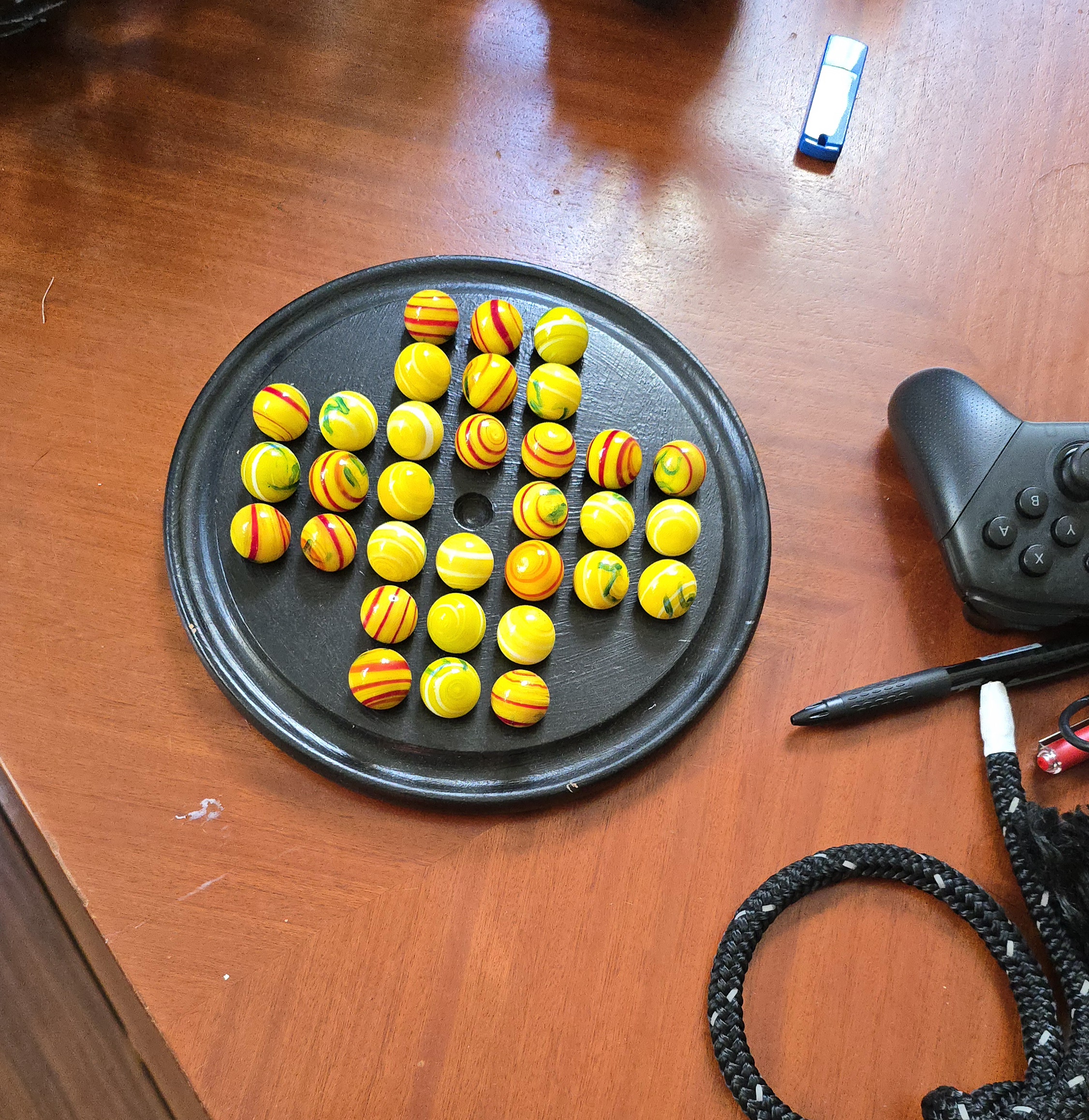
the one on my own coffee table
“Conditions that create challenges for the learner and appear to slow the rate of learning often enhance long-term retention and transfer.” —Robert A. Bjork
Interleaving is the practice of mixing different topics, problem types, or skills within a single study session, rather than studying one thing to completion before moving to the next. Its opposite—studying in long, single-topic runs—is called blocked practice. Interleaving is the third of the three pillars of durable learning, alongside active recall and spaced repetition, and like its siblings it is counter-intuitive: it feels worse while you do it and works better when it counts.
“We learn, in part, by forgetting.” —Robert A. Bjork
Spaced repetition is the practice of distributing study across increasing intervals of time rather than concentrating it into a single sitting. It is the load-bearing principle behind every serious flashcard system—see the companion Anki Explained essay for how the software puts it to work—and it is the most counter-intuitive of the three pillars of durable learning, because it deliberately makes each study session feel harder. These notes work from the empirical phenomenon (the spacing effect), through the theory of why it holds, to the mathematics and the scheduling algorithms that operationalise it.